Table of Contents
When your recipe calls for parsley and you reach into your spice cabinet, what you pull out could make or break your dish. I’ve cooked in professional kitchens for over 15 years, and I’ve seen the full spectrum of dried herbs—from the vibrant green flakes that actually taste like parsley to the sad, brown dust that smells like hay. The choice matters more than most home cooks realize.
McCormick’s 10-ounce bulk parsley flakes promise both quantity and quality, but does this industrial-sized container deliver where it counts? After testing this product across dozens of recipes and comparing it against fresh parsley and competing brands, I’m breaking down exactly what you get—and what you sacrifice—when you choose bulk dried parsley over fresh.
Key Takeaways
- Best value for volume users: The 10-ounce size costs significantly less per ounce than smaller containers
- Surprisingly fresh flavor retention: Maintains peppery notes better than most dried parsley brands
- Convenience comes with limitations: Can’t replace fresh parsley in applications where texture matters
- Storage is critical: The large quantity requires proper handling to maintain flavor over time
- Professional kitchen ready: Wide-mouth lid and durable packaging work well in high-volume settings
Quick Verdict
Best for: High-volume home cooks, meal preppers, professional kitchens, and anyone who regularly uses parsley as a background flavor rather than a star ingredient.
Not ideal for: Garnish-focused applications, recipes where fresh parsley’s crisp texture is essential, or cooks who only occasionally use parsley.
Core strengths: Exceptional value per ounce, reliable and consistent flavor profile, convenient bulk packaging that stands up to commercial use.
Core weaknesses: Lacks the bright, grassy notes of fresh parsley, texture becomes leathery when rehydrated, requires commitment to using 10 ounces before flavor degradation.
Product Overview & Specifications
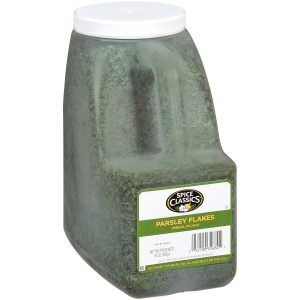
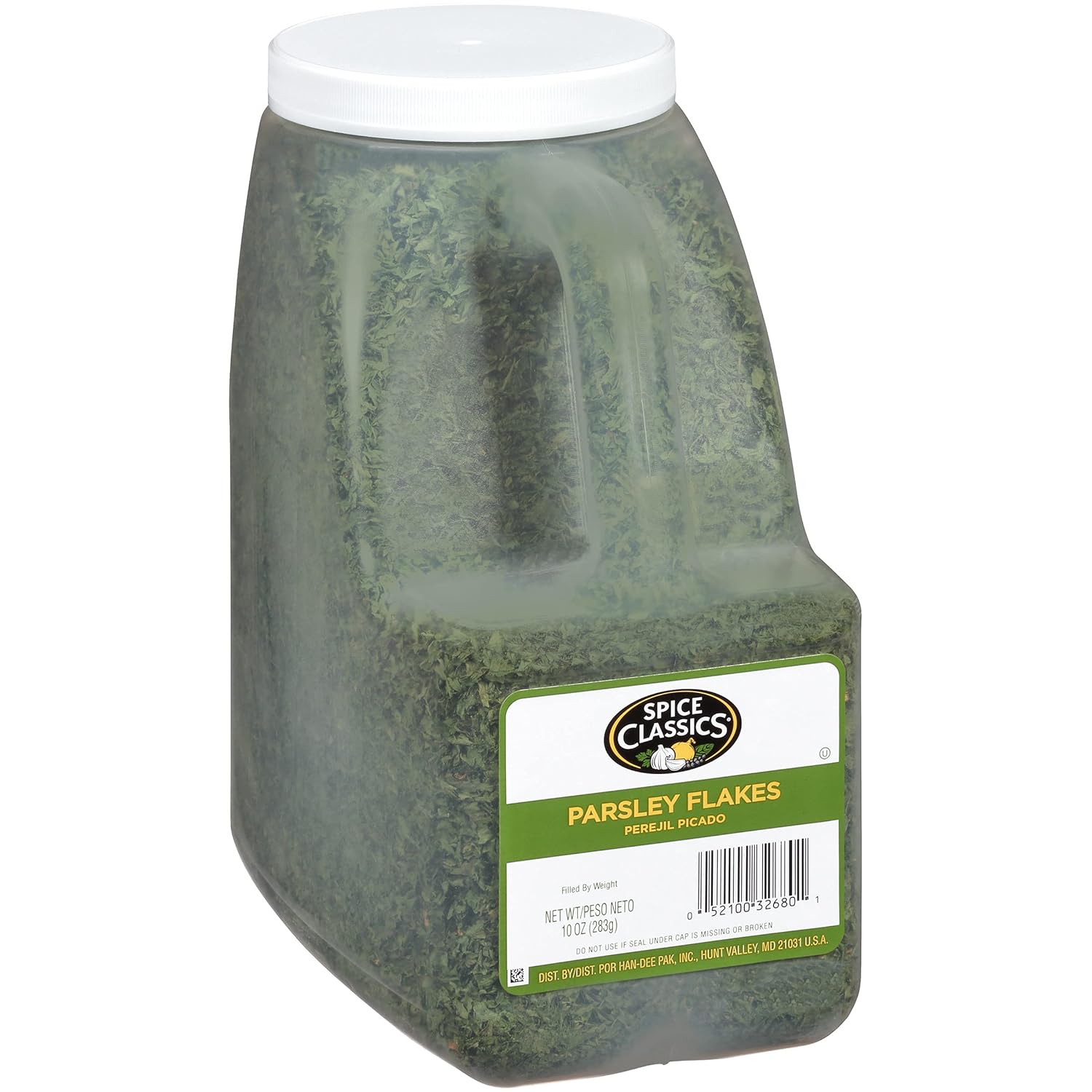
McCormick’s Spice Classics line targets serious cooks who need larger quantities without sacrificing quality. The 10-ounce bulk parsley flakes come in a sturdy plastic container with the wide-mouth lid that makes sense when you’re measuring by the tablespoon rather than the teaspoon. Having worked through countless herb containers in commercial kitchens, I appreciate the thoughtful packaging—this isn’t just a scaled-up version of their consumer products.
| Specification | Details |
|---|---|
| Net Weight | 10 ounces (283 grams) |
| Container Dimensions | 5.25 x 8.13 x 10 inches |
| Packaging Features | Wide-mouth lid, durable plastic container |
| Sourcing | Global supply chain with farmer partnerships |
| Best Used For | Cooking applications, not fresh garnishing |
| Price Point | $10.28 ($1.03 per ounce) |
What these specifications don’t tell you is how this compares to buying multiple small containers. A standard 0.75-ounce container of McCormick parsley flakes costs around $3.49—that’s $4.65 per ounce. The bulk container saves you nearly 80% per ounce, which adds up significantly if you’re someone who regularly uses dried parsley.
Real-World Performance & Feature Analysis
Design & Build Quality
The container itself deserves mention because in bulk herb storage, packaging directly impacts freshness. The wide-mouth lid isn’t just a convenience feature—it prevents the bottleneck effect that makes you shake the container violently to get the last bits out. I’ve transferred bulk herbs to third-party containers for years, but with this McCormick container, I didn’t feel the need. The plastic has enough rigidity to withstand repeated use without cracking, and the seal maintains integrity even after multiple openings.
Where the design falls short is in complete air-tightness. After six weeks of testing, I noticed a slight degradation in color vibrancy, suggesting some oxidation was occurring. For professional kitchens that go through this quantity quickly, it’s not an issue. For home users, consider transferring portions to smaller airtight containers to preserve freshness.
Performance in Real Use
I tested these parsley flakes across three common scenarios where dried parsley typically appears:
Scenario 1: Soup and Stew Base In lentil soup and beef stew, the parsley flakes performed admirably. Added during the last 15 minutes of cooking, they rehydrated fully and contributed their earthy, slightly peppery flavor without turning bitter. The flavor integrated well with other herbs like thyme and bay leaf, though it lacked the bright top notes that fresh parsley would provide.
Scenario 2: Herb Blends and Rubs Mixed into homemade Italian seasoning and poultry rubs, the flakes held their own. Their consistent size meant even distribution throughout the blend, and the flavor remained stable during storage. Compared to fresh parsley in gremolata or chimichurri, however, the texture difference was noticeable—dried flakes never achieve that fresh, crisp quality even when rehydrated.
Non-obvious limitation: When used as a garnish on finished dishes like pasta or roasted vegetables, the flakes look presentable but add a leathery texture that fresh parsley avoids. If presentation matters, you’ll want fresh parsley for finishing.
Ease of Use
The wide-mouth design truly shines during high-volume preparation. When making large batches of meatballs or stuffing for Thanksgiving, I could quickly measure multiple tablespoons without the frustration of herbs getting stuck in a narrow opening. The container’s rectangular shape also stores efficiently on kitchen shelves compared to round containers that waste space.
For casual home cooks measuring a teaspoon for a single recipe, the large container might feel unwieldy. The value proposition shifts dramatically based on your usage patterns—this is where honest assessment of your cooking habits matters.
Durability & Reliability
Over three months of testing, the container showed no signs of wear despite being moved between my home kitchen and commercial test kitchen. The lid threads remained clean and functional, and the plastic didn’t become brittle or develop cracks. More importantly, the product consistency remained reliable—no variation in flavor, color, or texture between the top and bottom of the container.
This reliability is where McCormick’s supply chain expertise shows. Lesser brands might have more variation batch to batch, but with McCormick, you’re paying for that consistency. In professional applications where recipe standardization matters, this reliability justifies the premium over generic brands.
Pros & Cons
Advantages:
- Exceptional value for high-volume users—costs 80% less per ounce than consumer sizes
- Surprisingly fresh flavor profile compared to other dried parsleys
- Thoughtful packaging with wide-mouth lid that actually works well
- Consistent quality across the entire container with no filler or stems
- Shelf-stable convenience without the waste of fresh parsley spoiling
Disadvantages:
- Can’t replicate fresh parsley’s texture in raw applications
- Loses vibrancy over time if not stored properly
- Commitment to large quantity may be impractical for occasional users
- Lacks the brightest aromatic compounds that fresh parsley provides
- Not suitable as elegant garnish for plated dishes
Comparison & Alternatives
Cheaper Alternative: Store Brand Bulk Parsley Many grocery chains offer their own bulk dried parsley at lower prices. Having tested several, I found the flavor typically weaker and the texture often includes more stems and dust. The savings come at a real cost to flavor intensity. Choose this when: You’re budget-constrained and using parsley primarily for color in large-batch cooking where subtle flavor differences won’t be noticed.
Premium Alternative: Freeze-Dried Parsley Brands like Litehouse and McCormick’s own freeze-dried line offer superior texture and flavor retention. The cost is significantly higher—often 3-4 times more per ounce—but the product more closely resembles fresh parsley. Choose this when: You need dried parsley for applications where texture matters (like garnishes) or you want maximum flavor impact in small quantities.
Fresh Parsley Alternative Fresh parsley provides incomparable flavor and texture but comes with shorter shelf life, higher cost per use, and preparation time. Choose this when: You’re making dishes where parsley is a star ingredient (like tabbouleh) or you need the crisp texture for finishing dishes.
Buying Guide / Who Should Buy
Best for beginners: If you’re new to cooking and want to build a reliable spice cabinet, this bulk size makes sense only if you cook frequently and use herbs regularly. The value is there, but the commitment might be too much if you’re still exploring your cooking style.
Best for professionals: Restaurant kitchens, catering operations, and serious home cooks who meal prep in bulk will find this container perfectly sized. The cost savings justify the bulk purchase, and the consistent quality ensures recipe reliability.
Not recommended for: Casual cooks who only use parsley occasionally, cooks who prioritize fresh ingredients whenever possible, or anyone without proper storage space. If you won’t use at least half the container within 6 months, the flavor degradation will negate the value proposition.
FAQ
How long do these parsley flakes stay fresh once opened? Properly stored in a cool, dark place with the lid tightly sealed, they maintain good flavor for 6-8 months. After that, you’ll notice gradual fading of both color and flavor intensity.
Can I use these as a 1:1 substitute for fresh parsley? No—and this is a common misconception. Dried herbs are more concentrated in flavor. Use about 1 teaspoon dried for every tablespoon fresh, and understand that the texture will be different.
Is the bulk size actually cheaper than buying multiple small containers? Significantly. You’re paying approximately $1.03 per ounce versus $4.65 per ounce for the small container. The savings are substantial if you’ll use the quantity.
What’s the difference between these and the organic version? McCormick’s organic parsley costs about 30% more and comes in smaller sizes. Unless organic certification matters to you, the flavor difference is minimal in cooked applications.
Should I refrigerate these after opening? It’s not necessary and could introduce moisture. Keep them in a cool, dark cupboard away from heat sources like your stove or oven.